
[A]Although water covers more than seventy percent of Earth's surface, almost all of it is salty ocean water. Humans cannot drink seawater or use it to water farm crops because the high amount of salt damages the body and dries out plant roots. Only a tiny fraction of Earth's water is fresh liquid found in rivers and lakes.
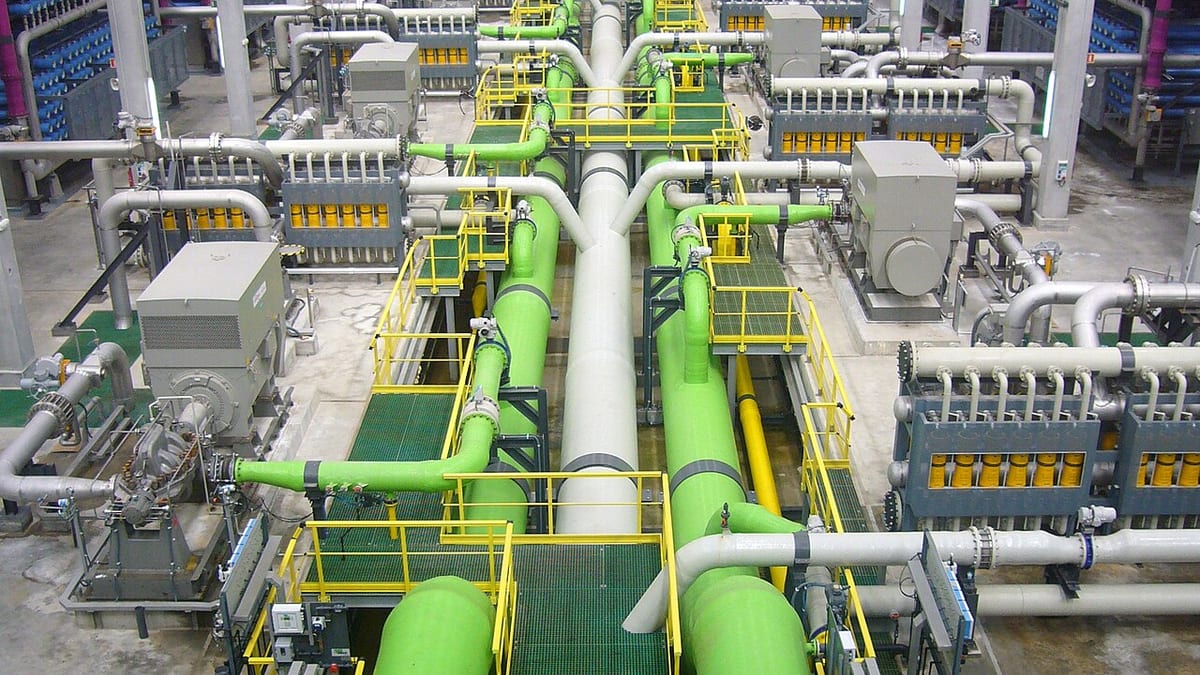
[B]In dry coastal regions where rain is rare, engineers build special factories called desalination plants. These plants take in salty water from the sea and remove the salt and minerals.
[C]There are two main ways to do this. The older method boils seawater in large tanks until it turns into steam, leaving the heavy salt behind. When the clean steam cools down, it turns back into fresh liquid water. Today, most modern plants use a different method called reverse osmosis. High-pressure pumps push seawater through extremely thin plastic sheets with microscopic holes. Water molecules pass through the holes easily, while salt particles are blocked. Although desalination still uses a lot of electricity, solar energy is making the process cleaner every year.
[D]To reduce electricity costs, many modern desalination plants now use rooftop solar panels and coastal wind turbines to power their high-pressure pumps. Engineers also install clever pressure exchangers that capture energy from the outgoing salty water and use it to help push new seawater into the filters, cutting power use by almost one third.
[E]Before the clean water travels through city pipes to homes and schools, technicians test its quality every morning. Because filtered seawater has almost no natural minerals left inside it, workers add small, healthy amounts of calcium and magnesium so the drinking water tastes fresh and does not rust household metal pipes.