
[A]From summer fireflies flashing across damp meadows to deep-sea anglerfish hunting in the pitch-black ocean depths, thousands of species possess the ability to produce their own light. Known as bioluminescence, this natural phenomenon differs fundamentally from an ordinary incandescent light bulb. Whereas a traditional bulb wastes nearly ninety percent of its electrical energy as heat in order to make a metal filament glow, bioluminescent organisms generate "cold light" through a remarkably efficient chemical reaction.
[B]In most glowing species, the reaction requires just two principal molecules: a light-producing compound called luciferin and an enzyme catalyst called luciferase. When luciferase brings luciferin together with oxygen, the chemical bond shifts and releases energy almost entirely in the form of visible photons, with virtually zero thermal waste. Marine biologists estimate that more than three-quarters of creatures living below five hundred metres in the ocean rely on bioluminescence to startle predators, lure prey, or signal to mates in total darkness.
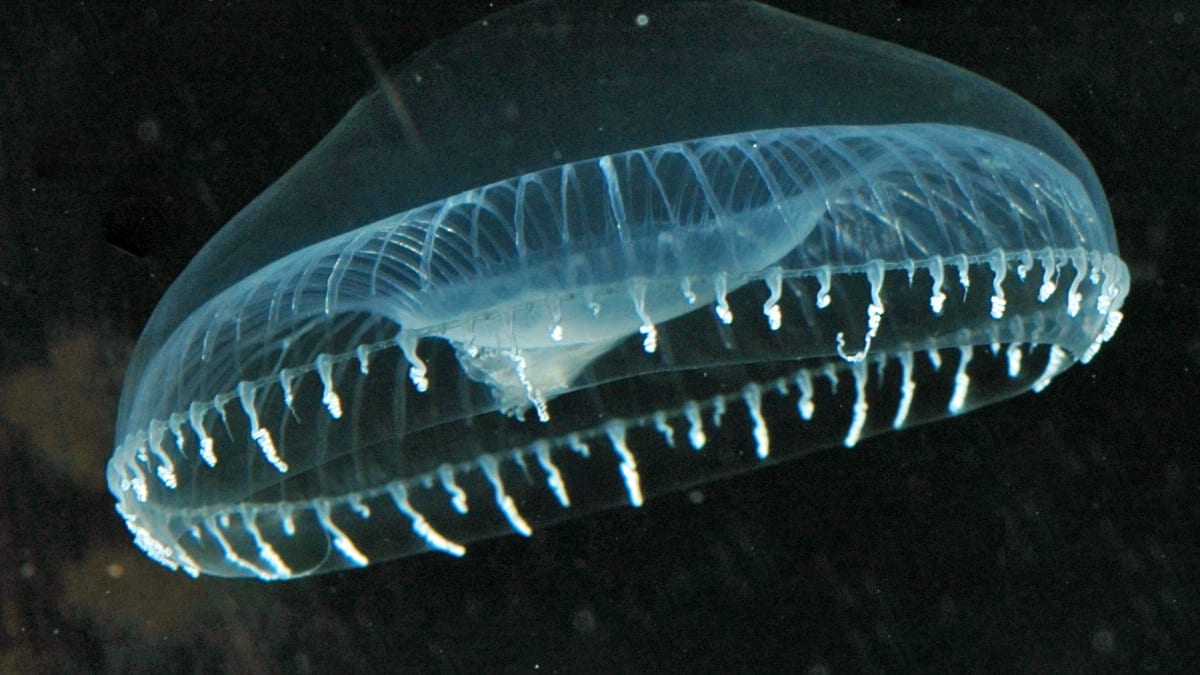
[C]Over the past three decades, biochemists have adapted these marine and insect light mechanisms into indispensable tools for medical research. By isolating the gene responsible for glowing proteins—most notably Green Fluorescent Protein (GFP), originally discovered in the crystal jellyfish—scientists can attach a harmless "light tag" to specific proteins or disease cells inside living tissue.
[D]Under a specialized laboratory microscope, researchers can watch in real time as tagged immune cells pursue bacteria, or observe whether an experimental cancer drug successfully halts tumour growth. What began as an evolutionary curiosity in the ocean depths now illuminates the microscopic workings of human biology.
[E]To appreciate how these glowing molecules revolutionized cell biology, it helps to distinguish between two different light-producing proteins found in nature. True bioluminescence—the chemical reaction between luciferin and a luciferase enzyme—produces light in complete darkness without needing any external lamp, much like a chemical glow-stick. By contrast, green fluorescent protein (GFP), first isolated from the crystal jellyfish *Aequorea victoria* by marine biochemist Osamu Shimomura in the 1960s, works by absorbing invisible ultraviolet or blue light and instantly re-emitting it as a bright green glow. When molecular biologists learned how to attach the gene for GFP onto another protein’s genetic blueprint, they gained a glowing molecular tag that made invisible cellular machinery visible under a microscope.
[F]Beyond medical laboratories, environmental scientists are using bacterial bioluminescence to build living early-warning sensors for water and soil pollution. By inserting the light-producing *lux* gene cluster from marine bacteria into harmless soil microbes, researchers have created biosensor strains that glow steadily when their water supply is clean. The moment toxic heavy metals such as arsenic, mercury, or cadmium seep into the groundwater, the pollutants interfere with the bacteria’s metabolism and cause the light output to dim within minutes—warning water-treatment operators hours before slow chemical tests could detect a spill.
[G]Plant biologists have also engineered self-illuminating crops that report their own health to farmers in real time. Using metabolic pathways borrowed from glowing forest mushrooms (*Neonothopanus nambi*), which naturally convert a common plant compound called caffeic acid into luciferin, scientists bred tobacco and potato plants whose leaves emit a soft green glow when stressed by drought, frost, or insect attack. An infrared camera mounted on a greenhouse roof or farm tractor can photograph a field at night and direct irrigation water only to the thirsty rows that are glowing brightest.
[H]Despite these breakthroughs, imaging glowing cells deep inside the human body still faces a stubborn physical hurdle: hemoglobin in red blood cells and melanin in skin strongly absorb blue and green wavelengths of light. A green glow emitted by cells deep inside a liver or lung is scattered and blocked before it can reach a camera outside the body. To overcome this "optical window" limitation, protein engineers are now designing synthetic red-shifted luciferases that emit longer, near-infrared wavelengths, allowing doctors to track immune cells and gene therapies several centimetres beneath the skin without invasive biopsies. Clinical trials are already evaluating whether these deep-tissue bioluminescent reporters can reveal within forty-eight hours whether an immunotherapeutic T-cell infusion has successfully infiltrated a patient's solid tumour.