
[A]Solar panels and wind turbines generate vast amounts of clean electricity, yet both depend on the weather. Solar farms produce peak power at midday, whereas households use the most electricity in the evening after sunset. To balance supply and demand, power grids need large rechargeable batteries that can store excess daytime energy and release it at night.
[B]Currently, most rechargeable batteries in smartphones, laptops, and electric cars rely on a light metal called lithium. Lithium stores a high amount of energy in a small space, which is ideal for portable devices. However, lithium is relatively scarce, expensive to mine, and concentrated in only a few countries. Building giant lithium batteries for entire cities can therefore be costly.
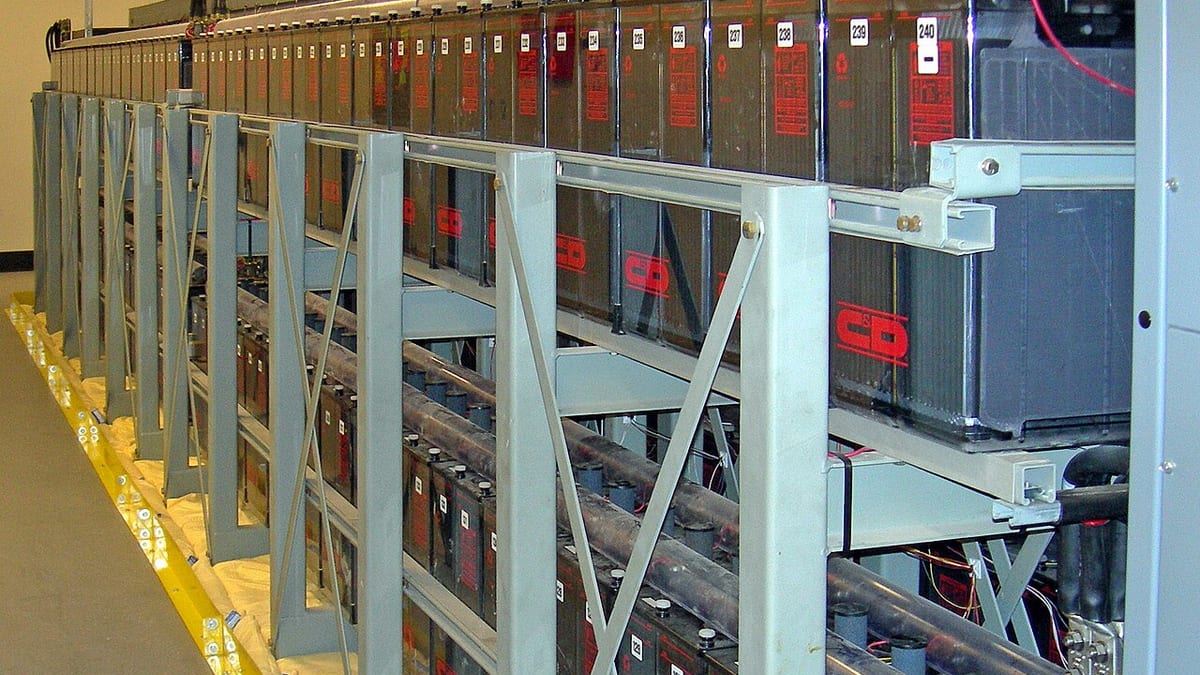
[C]Consequently, materials scientists are developing sodium-ion batteries. Sodium is chemically similar to lithium, but it is extracted from ordinary salt—one of the most abundant substances on Earth. Because sodium atoms are slightly larger and heavier than lithium atoms, a sodium battery holds slightly less energy for its weight. While that extra weight matters in a small mobile phone, it is not a problem for stationary battery buildings sitting beside a solar farm. Early grid tests show that sodium batteries also perform reliably in freezing winter temperatures and carry a much lower risk of overheating.
[D]To build these batteries without rare metals, chemists pair a cathode made of "Prussian white"—a common iron-and-cyanide pigment related to laundry bluing—with a "hard carbon" anode produced by heating agricultural waste such as coconut shells, corn cobs, or wood sawdust. Because aluminum does not alloy with sodium at low voltages, manufacturers can also replace the heavy, expensive copper current collectors required at the negative pole of lithium batteries with lightweight aluminum foil on both sides of the cell.
[E]Sodium-ion cells also offer a major safety advantage during shipping and storage. Unlike lithium-ion batteries, which must always retain a partial electrical charge to prevent their copper foils from dissolving and causing internal short circuits, a sodium-ion battery can be discharged completely down to zero volts. Cargo ships, trains, and warehouse operators can therefore transport sodium battery packs without the risk of electrical sparks or chemical fires during transit.
[F]Because sodium atoms are heavier and wider than lithium atoms, first-generation sodium-ion batteries store roughly thirty percent less energy per kilogram than premium lithium cells. Consequently, they will not replace lithium batteries in ultra-thin smartphones or long-range luxury sports cars. Instead, battery makers are installing sodium-ion packs in two-wheeled electric scooters, compact city commuter cars, backup power banks for telecommunications towers, and large grid-scale battery stations parked beside solar and wind farms.